ServicesWater Softeners
Water Softener Installation in Galena Park
Crusty faucets, cloudy glasses and shampoo that barely foams are often signs of minerals in your water. We measure your hardness before recommending anything, size the softener to the result, and install it with your floors covered and everyone at home kept in the loop.
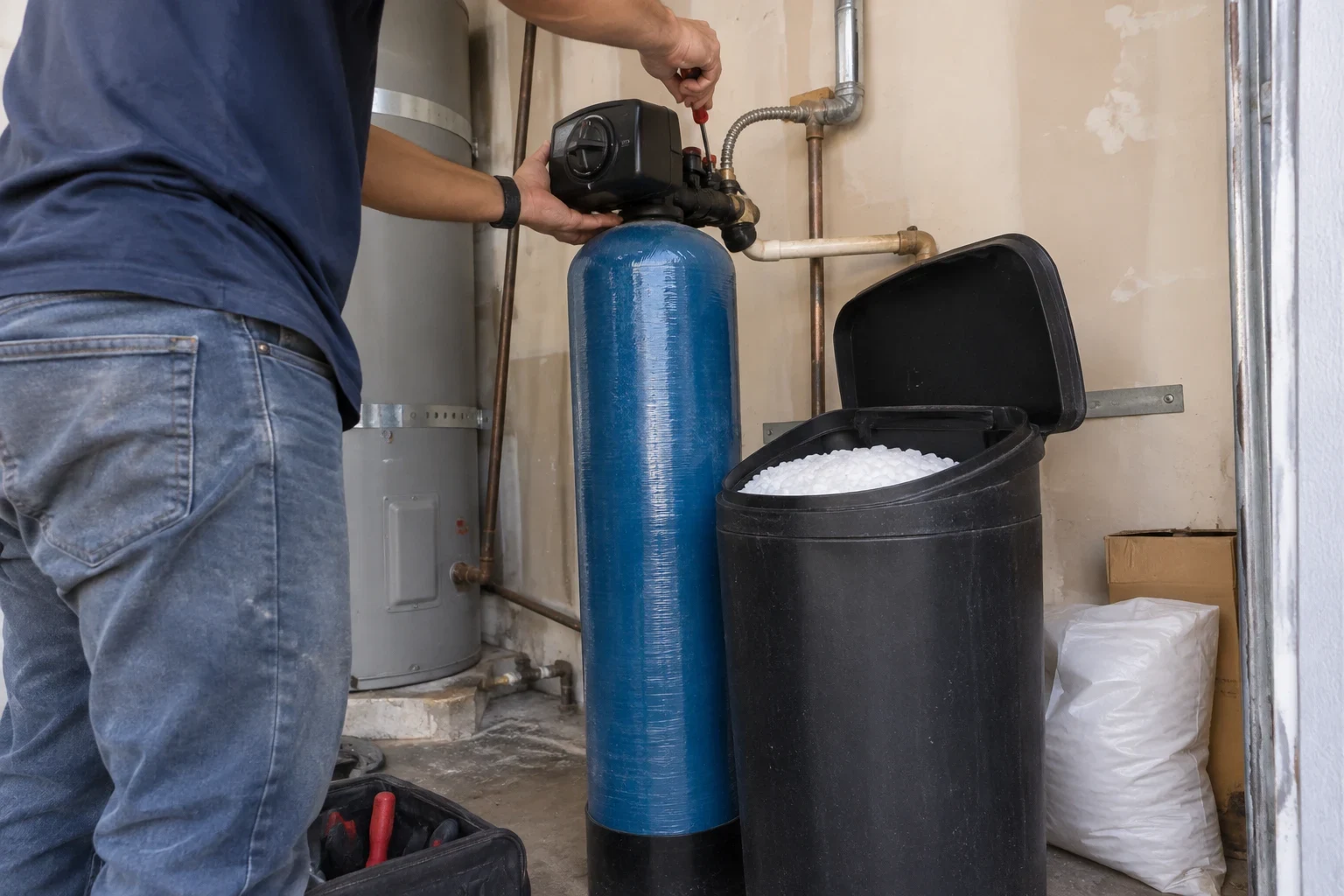
How softening works and who it helps
Inside a softener is a tank filled with small resin beads. As water flows through, those beads grab the calcium and magnesium that turn into scale. On a regular cycle, the system flushes the beads with salty water from a separate brine tank so they're ready to work again. The result is water that rinses cleaner off dishes, feels softer on skin and stops leaving crust inside your water heater and fixtures.
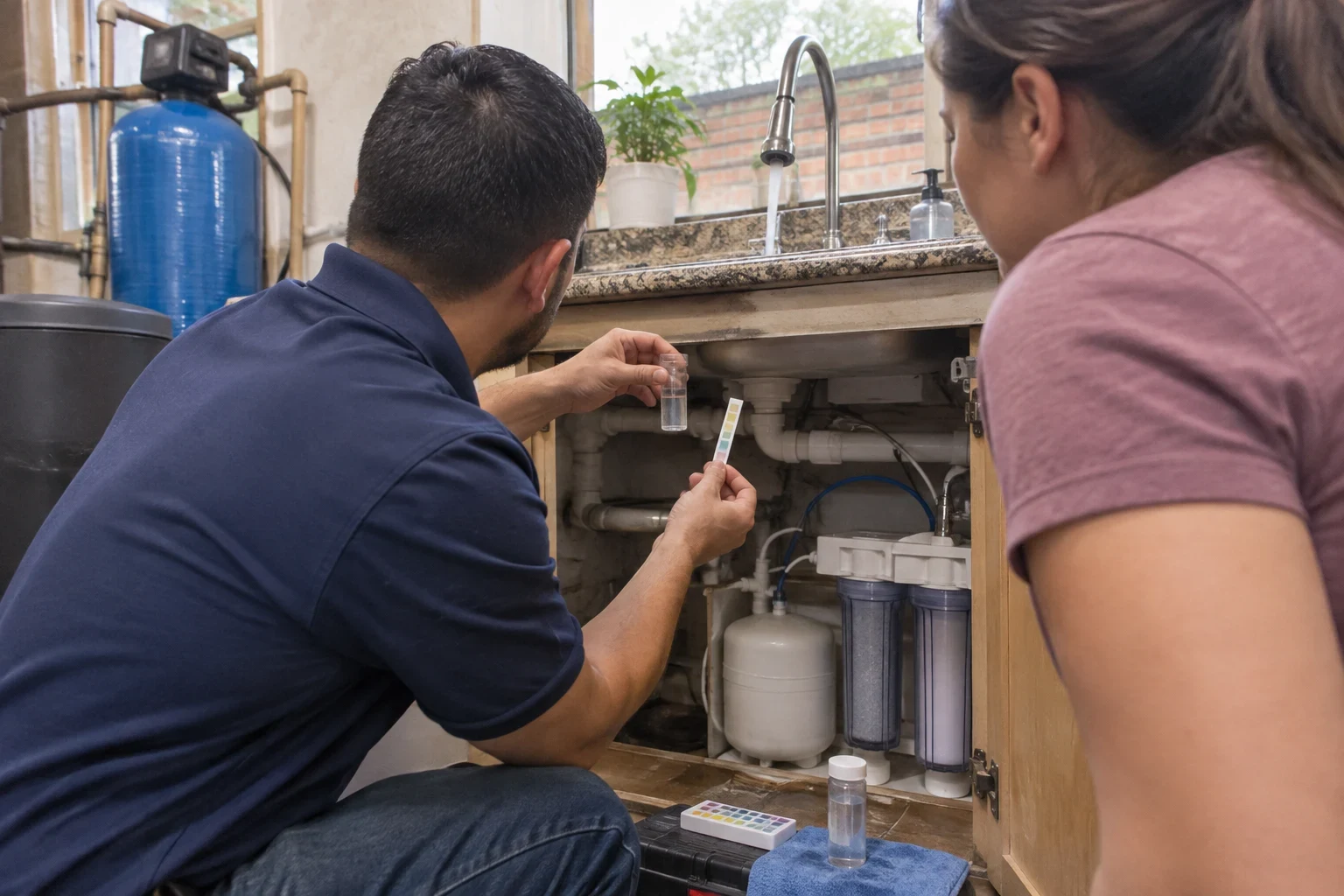
Softening pays off when the mineral level in your water is high enough to leave scale, spots and soap film behind. That's why we start by testing hardness right at your kitchen tap. If the number comes back low, we'll tell you plainly, and if chlorine taste or smell is the real complaint, whole-home filtration or reverse osmosis may be the better fit. In business 13 years, we've learned that an honest reading up front saves people from paying for equipment that won't fix what's bugging them.
What your softener installation includes
- 01
Hardness test and sizing
We measure your water's hardness and ask how many people live in your home. That tells us how much capacity the softener needs so it isn't undersized and regenerating constantly.
- 02
Bypass valve and plumbing tie-in
We connect the softener to your main line with a bypass valve, so you can send water around the system any time without shutting off your home's supply.
- 03
Drain line for regeneration
The rinse cycle needs somewhere to go. We run a proper drain line with an air gap so wastewater can't back up into the system.
- 04
Brine tank setup and control programming
We set up the brine tank, add the first load of salt and program the control valve for your hardness and household size.
- 05
Walkthrough and service after the sale
Before we leave, we show you how to check the salt, use the bypass and read the display. We provide full services after the sale, so you have someone to turn to when questions come up later.
Questions about Water Softeners?
Call(713) 597-5468Clues that hard water is affecting your home
Chalky buildup on fixtures
Scale appears first wherever water dries on a surface. Weekly scrubbing of faucet aerators and shower doors is a strong hint that hardness is to blame.
Cloudy glasses after every wash
Those spots that return after each dishwasher cycle are mineral deposits left behind when the water evaporates.
Soap and shampoo that barely foam
Minerals react with soap, so it takes more to get a lather. A dull film tends to linger on your skin, hair and bathtub.
Rumbling from the water heater
Minerals collect on the floor of the tank and form a layer that water gets trapped beneath. As it heats, you hear popping, and the heater burns more energy to do its job.
Rough towels and dull clothes
Mineral and detergent residue cling to fabric. Towels feel scratchy and dark clothes fade faster than they should.
What to expect from first call to final walkthrough
- 1
Start with a phone call
Tell us what you've been seeing, whether it's spots, scale or dry skin, and where in the house it's worst. We'll pick a visit time that fits around your family's day.
- 2
Hardness test at your home
We check your water on site and explain the reading in plain terms. If you don't need a softener, we'll say so before anything else happens.
- 3
Agree on the plan first
We point out where the softener and brine tank will go, the route for the drain line and how long the water will be shut off. No pipe gets cut until you're happy with the plan.
- 4
Install day, home protected
Our crew puts on shoe covers at the door, lays drop cloths along the path and around the work area, and keeps gear out of your garden beds if the tie-in is outside. Everyone in the house gets a heads-up before the water goes off and another when it's running again.
- 5
Cleanup and handoff
We haul away the boxes and old fittings, wipe down the work area and start the first regeneration cycle with you standing beside us. Then we walk you through topping up the brine tank, flipping the bypass valve and making sense of what the control panel shows.
What moves the price of a water softener
Installation is free with us, so your total mostly reflects the equipment and the setup your home calls for. We walk you through every line of the quote, first on the phone and again at the visit, so nothing on it is a mystery. These are the things that shift the number most.
- How hard your water is and how many live there
- Every extra grain of hardness and every extra person adds to the mineral load the softener handles daily. A bigger load needs a larger resin tank with more capacity.
- Metered or timer-based valve
- A metered valve only regenerates after a set amount of water has passed through, so it uses less salt and water over time. A timer valve runs on a schedule and is cheaper to buy.
- Location and plumbing access
- Setting the softener in a garage or laundry room close to the main line keeps things simple. When there's no softener loop already in place, or the main sits somewhere awkward, more plumbing work goes into the job.
- Protecting the resin
- Chlorine and iron can break down softener resin over the years. When your test turns them up, we may suggest a carbon or sediment stage ahead of the softener, which adds to the equipment cost.
Common questions about water softeners
Does softened water taste like salt?
Usually not. How much sodium ends up in the water depends on how hard it was before softening, and at ordinary levels most people never notice it. If you want it out of your drinking water anyway, a reverse osmosis system under the kitchen sink takes care of that.
How do I know if I need a softener or a filter?
Each one handles a different job. A softener pulls out the calcium and magnesium that cause scale and spots, and whole-home filtration deals with chlorine, taste and odor. Once we test your water, you'll see whether you need one, the other or both.
How much salt will I go through?
It depends on your water's hardness, how much water your family runs each day and the type of valve on the system. Most people peek into the brine tank every few weeks, and if the salt has sunk below the waterline, it's time to pour in another bag. Before we leave, we'll open the tank with you so you know what full and low look like.
What standards does your equipment meet?
We're NSF Certified. When we visit, we're glad to explain what that means for the softener we put in your home and answer any questions about it.
Who do I contact if there's a problem down the road?
Us. We provide full services after the sale, so if the display shows an error, the salt forms a crust that won't dissolve or the water starts feeling hard again, give us a ring and we'll come take care of it.
Find out if softening is right for your water
We test before we recommend anything, and we treat your home like our own while we work. We serve Galena Park and nearby towns including Jacinto City, Pasadena and Channelview.