ServicesWell Water Treatment
Well Water Treatment in Galena Park
If your well water smells like eggs, stains the tub orange or leaves grit in the aerators, we can fix the cause. We test first, explain what we found in plain words and install a system sized to your well, with your floors and yard protected the whole time.
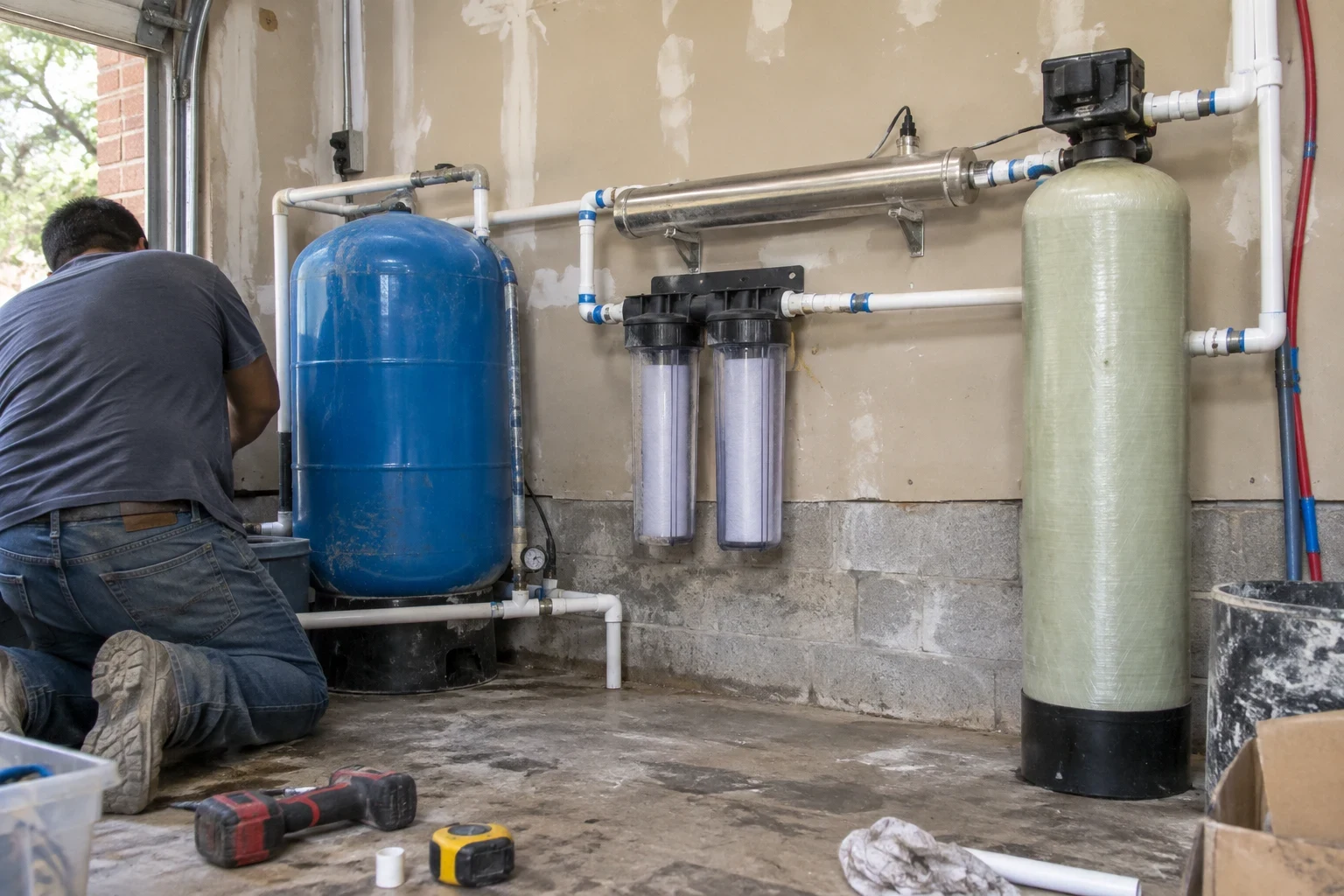
Treatment that starts with what is actually in your well
A private well has no utility treating the water before it reaches your tap. That job falls to you, and the right equipment depends entirely on what your water carries. Iron, manganese, hydrogen sulfide, sediment and bacteria each need a different approach, and a system built for one can do little for another.
So we never pick equipment from a catalog and hope. We look at a test of your water, your well's flow rate and how many people live in your home, then recommend the fewest stages that will solve the problem. We have been in business 13 years and are NSF Certified, and we would rather put in one correct system than three that miss.
What a well treatment job includes
A water test before any recommendation
We check for the usual well troublemakers such as iron, sulfur, hardness, pH and sediment, and we can arrange bacteria testing. Our Water Testing page explains the full process.
Sediment filtration
Sand and silt wear out valves, fixtures and appliances. A sediment stage at the front of the system catches it before it reaches anything else.
Iron and sulfur removal
Orange staining and a rotten-egg smell usually come from dissolved iron and hydrogen sulfide. We use oxidizing filtration that converts them to particles and backwashes them away.
Bacteria protection
If testing shows bacteria, or you simply want a safeguard, an ultraviolet stage treats the water as it passes through without adding chemicals.
Clean installation and a clear handoff
We lay down floor runners, cover nearby surfaces and keep work around the wellhead off your plants and beds. Before we leave, we show everyone in the house how the system works and what upkeep it needs.
Signs your well water needs treatment
A rotten-egg smell
Hydrogen sulfide is common in well water and is often worse with hot water. It is unpleasant but very treatable.
Orange, brown or black stains
Rust-colored rings in toilets and sinks point to iron. Black or dark brown spotting often means manganese.
Grit or cloudiness
Sand in aerators, cloudy glasses or a clogged showerhead mean sediment is getting through.
Metallic or odd taste
If your coffee or tea tastes off, minerals or a low pH may be the reason.
No recent test
Many well owners have not tested in years. A well can look and taste fine while still carrying bacteria, so a test is worth doing even without symptoms.
How we handle your well water project
- 1
A phone conversation
You tell us what you are noticing and how your well is set up. We explain what we would test for and set a time that suits your household.
- 2
Testing and a written plan
We test the water and walk you through the results in plain terms. You get a written recommendation that lists each stage and why it is there, so nothing is a mystery.
- 3
Installation day
We protect the path from the door to the equipment area, work tidily near your pressure tank and wellhead, and keep you posted on any water shutoff before it happens. Most installs keep the disruption to a few hours.
- 4
Walk-through and follow-up
We run the system, check that the water is clear, and show you the bypass valve and maintenance schedule. We clean up fully, and our full services after the sale mean you can call us whenever you have a question.
What affects the cost of well water treatment
Well treatment costs vary more than city water filtration because every well is different. We give you a written plan with each part listed before any work begins. We also offer free installation, so what you are paying for is the equipment your water actually needs.
- What the test finds
- Water with only sediment needs one simple stage. Iron, sulfur and bacteria together call for several.
- Contaminant levels
- Heavier iron or sulfur requires larger tanks or stronger oxidizing media to keep up.
- Flow rate and household size
- The system has to match how much water your family uses at once, so showers and laundry do not lose pressure.
- Equipment location and plumbing
- Room near the pressure tank, existing shutoff valves and access to a drain for backwashing all affect the setup.
Well water treatment questions
Something not covered here? (713) 597-5468
Will a treatment system lower my water pressure?
Not if it is sized correctly. We check your well's flow rate and your household's peak use before choosing equipment. Undersized systems are what cause pressure drops, which is why we measure first.
Can you get rid of the sulfur smell for good?
In most homes, yes. Hydrogen sulfide responds well to oxidizing filtration. If the smell is only in hot water, we will also look at your water heater, since that can be part of the cause.
Do I also need a water softener?
Only if your test shows hardness high enough to cause scale. Some wells need one and many do not. You can read more on our Water Softeners page, but we will tell you honestly based on your results.
How often should I test my well?
Once a year is a sensible habit, and again any time the taste, smell or color changes or after flooding. Testing after installation also confirms the system is doing its job.
What upkeep does the system need?
It depends on the stages. Sediment cartridges get changed periodically, UV lamps are replaced on a schedule, and backwashing filters mostly take care of themselves. We leave you a simple written schedule.
Can I add drinking water filtration too?
Yes. Many well owners add an under-sink system for cooking and drinking water after the whole-house treatment. Our Reverse Osmosis page covers how that works.
Find out what your well water needs
Tell us what you are seeing, smelling or tasting, and we will explain the next step and set up a test. We treat your home with care from the first visit to the final cleanup.